

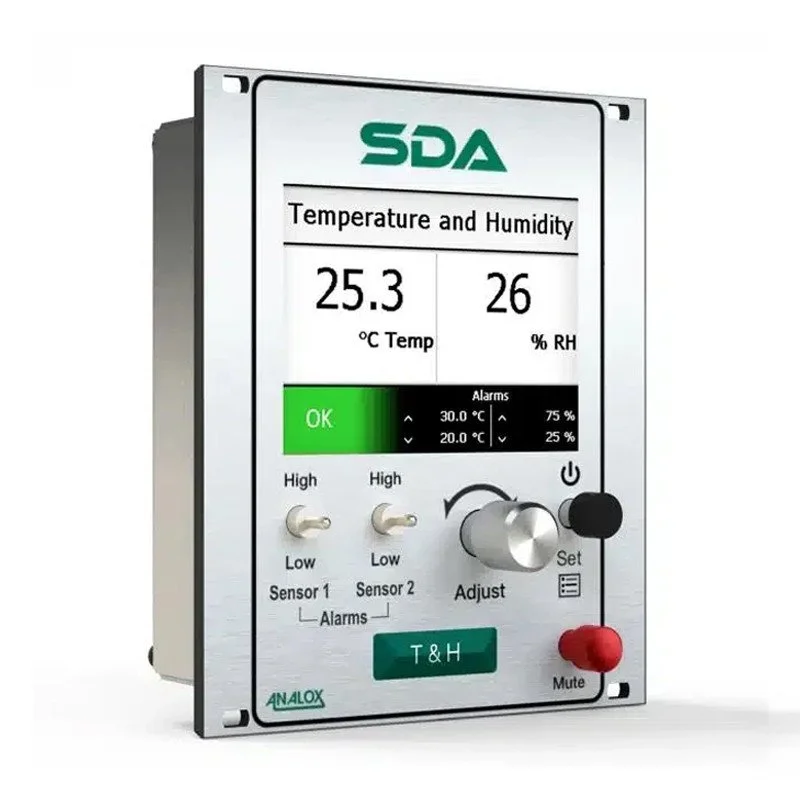
The SDA Temperature and Humidity can help monitor comfortable and safe levels of temperature and humidity in diving chambers and dive systems.
The SDA Temperature and Humidity monitor provides a full-colour display of both temperature and humidity.
The alarm set points can be adjusted using the front panel user interface and the SDA Temperature and Humidity provides audio/visual alarms, optional data-logging and 4-20mA/relay outputs (for 1 reading). The monitor interfaces with a state of the art dual temperature and humidity probe.
The SDA Temperature and Humidity replaces the now obsolete Analox 4000 (Temperature) and Analox 7000 (Humidity).
Maintaining a comfortable temperature in a diving chamber or dive system is vital for the comfort and well-being of the divers and is required by classification bodies and industry guidelines. Relatively small changes in temperature can prove to be dangerous due to the thermal conductivity of helium.
Humidity levels also need to be maintained for the comfort and well-being of the divers. If the humidity level is too high this can encourage microbial growth which can cause health issues in the chamber.
The SDA Temperature and Humidity monitor can be located in sat/dive control or at the compressor. The probe is located either in the chamber or in the gas pipework:
Chamber Version
The probe is mounted inside the chamber is ideal for monitoring levels in a hyperbaric chamber, lifeboat or diving bell to help ensure a comfortable and safe living and working environment is maintained in line with industry guidelines.
Inline Version
The probe is mounted inside the gas pipework, ideal for monitoring the breathing gas supply temperature and humidity in line with classification requirements such as the ABS rules for building and classing underwater vehicles, systems and hyperbaric facilities.
The gas monitor reads results from a state-of-the-art, long-life digital electrochemical sensor. These results are shown on a full colour display.
The SDA ROC is used on some of the world’s most advanced diving systems including a new build vessel for the BP Exploration Shah Deniz II project in the Caspian Sea.
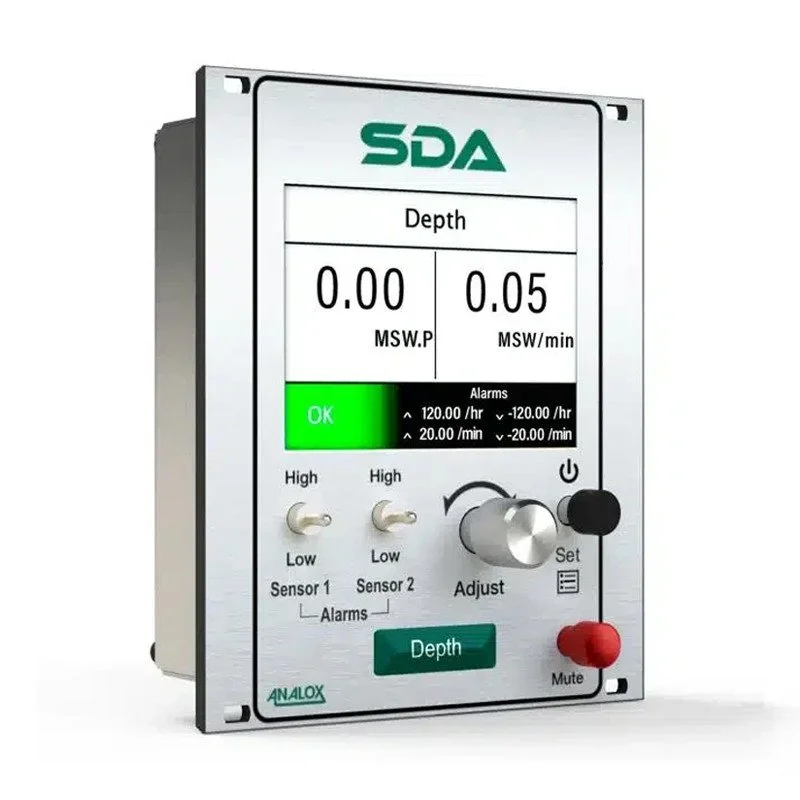
To ensure diver safety it is essential to monitor and control the rate of change (ROC) of pressure to avoid hazardous rates of decompression. If the ROC is too high there is an increased risk of divers suffering the bends.
The monitor provides alarms that are based not on the depth level but on the rate at which the depth is changing.
The SDA ROC monitors the pressure of an occupied dive chamber and triggers an alarm if the rate of change is too high. It does this by sampling readings from a depth sensor and applying an algorithm to smooth the effects of any sudden changes. The SDA uses the readings to calculate the ROC value which it then compares against its pre-set alarm thresholds.
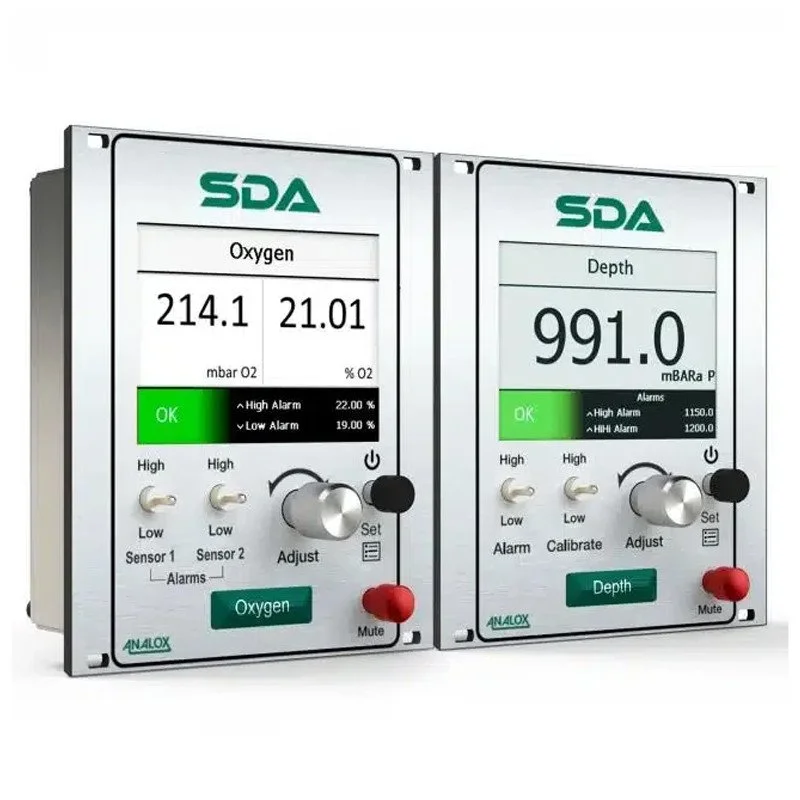
The SDA dual oxygen (O₂) monitor measures oxygen (O₂) readings in both partial pressure (mbar O2) and as percent volume (%O2).
The dual SDA O₂ is a panel/rack mountable oxygen monitor with audio/visual alarms which comprises of an SDA monitor and a MEC sensor module, including the oxygen (O₂) cell. It is designed to be highly modular and flexible so it can be easily integrated into custom atmospheric monitoring solutions.
The dual SDA display has the ability to display oxygen (O₂) readings in both partial pressure (mbar O₂) and as percent volume (%O₂). This will allow the end user to read the levels of oxygen (O₂) in either parameter without having to carry out any conversion calculations.
A pressure sensor is required for the SDA O₂ to enable the display to be presented in partial pressure (mbar O2), this must take a reading from the same location as the gas measurement.
Information is communicated via Ethernet to the SDA O₂ display to calculate a partial pressure readout.
The unit monitors the chamber’s internal atmosphere by the use of external sensors. The alarm set points and calibration can be achieved using the front panel user interface. The SDA O₂ provides audio/visual alarms, optional data-logging and 4-20mA/relay outputs.
The SDA ROC sensor is attached to a habitation chamber, hyperbaric lifeboat or diving bell. To comply with DNV Offshore Standard 402, a digital interface is used between the sensor and the SDA. The ROC alarm constants can be changed to suit different chamber sizes and configurations. Two alarm thresholds can be selected: meters/feet of sea water per minute or meters/feet of sea water per hour.
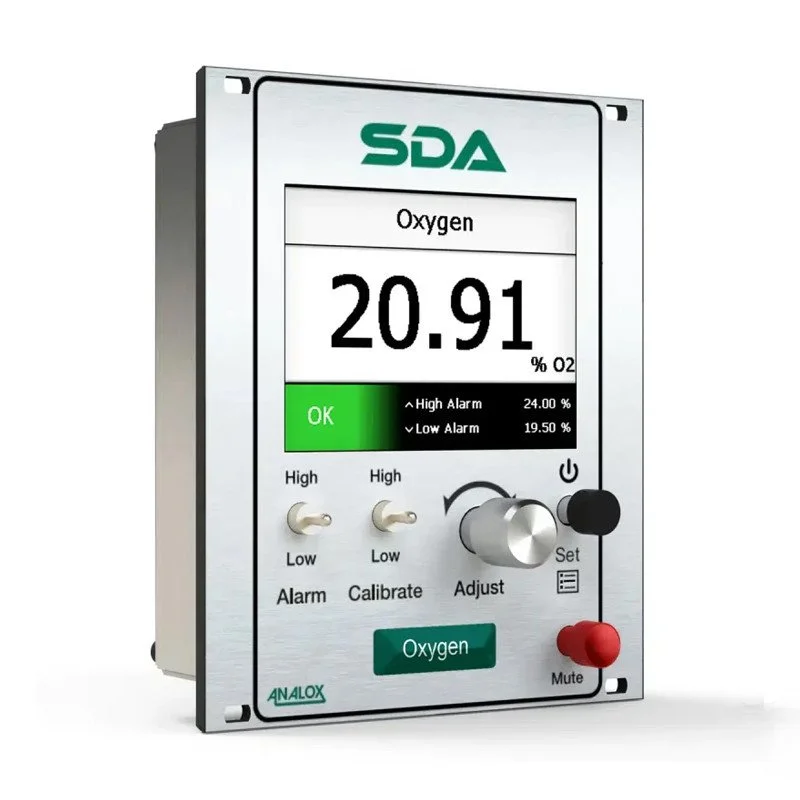
The monitor provides a full-colour display of the oxygen (O₂) reading taken from an electrochemical sensor. The alarm set points and calibration can be achieved using the front panel user interface. The SDA O₂ provides audio/visual alarms, optional data-logging and 4-20mA/relay outputs. The monitor interfaces with our state of the art digital MEC sensor.
The SDA O₂ oxygen monitor replaces the now obsolete Analox 1000 and is fully retrofittable as a direct replacement.
Maintaining a comfortable and safe chamber environment is vital to achieving a successful diving operation. The accuracies supplied by the SDA O2 are compliant with DNV, IMCA, Lloyds, ABS, and ADCi requirements/guidelines.
The SDA O₂ is normally located in sat/dive control and the sensors can be either located at the panel or inside the chamber or diving bell.
We offer an optional flow panel to go alongside the SDA O₂ which provides fine control after the sample has been reduced from the chamber. Both the SDA O₂ and the optional flow panel can be provided as either rack or panel mount.
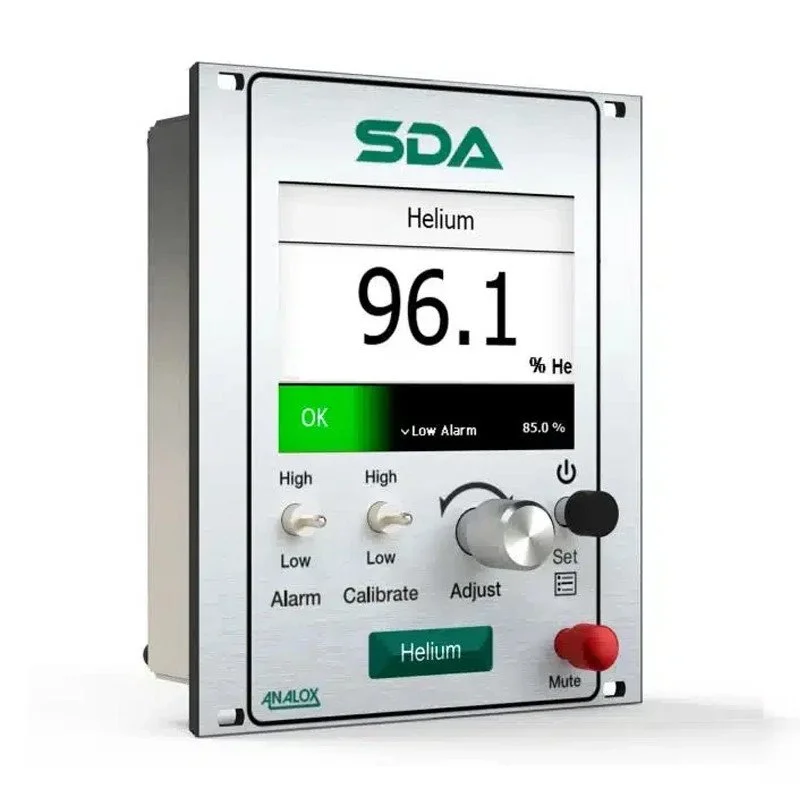
The SDA Helium (He) monitor is part of a range of panel/rack mountable atmosphere detection monitors designed with commercial diving in mind.
The SDA He monitor provides a full-colour helium (He) reading. To achieve maximum accuracy, it must be used in conjunction with the SDA O2 with the networking option selected.
The alarm set points and calibration can be achieved using the front panel user interface. The SDA He provides audio/visual alarms, optional data-logging and 4-20mA/relay outputs.
Helium is an expensive and vital saturation diving commodity. Monitoring the purity of the heliox in the reclaim system is vital for safety and for operations to remain cost effective.
The SDA He is normally located in sat/dive control and can be supplied in rack or panel mount configurations. Alternatively the SDA He can be placed in the helium reclaim area.
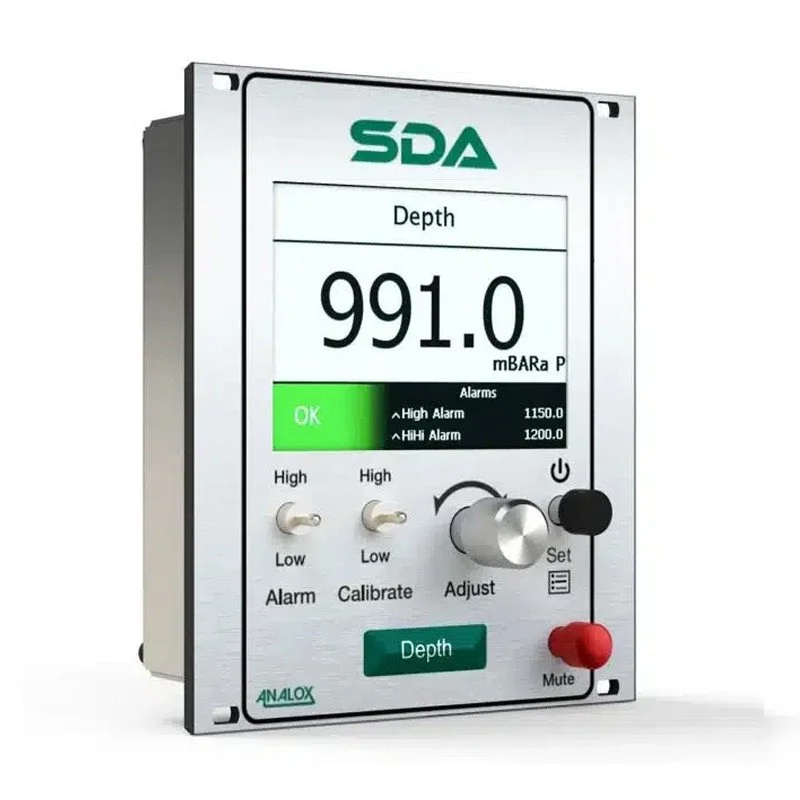
The SDA Depth provides a full-colour display of depth and pressure to help ensure the safety of your divers. The SDA is a range of panel/rack mountable atmosphere monitors originally designed with commercial diving in mind. The monitor provides a full-color display of the depth/pressure reading.
The alarm set points and calibration can be achieved using the front panel user interface. The SDA Depth provides audio/visual alarms, optional data-logging and 4-20mA/relay outputs. The monitor interfaces with a pressure sensor provided by Analox or can be set up to interface with a third party sensor which provides a 4-20mA output.
The SDA Depth replaces the obsolete Analox 6000.
Monitoring the depth of diving chambers is vital to the whole operation. Depth readings are also used with the gas readings to calculate the partial pressures to ensure the safety of the divers.
The SDA Depth is normally located in sat/dive control and can be supplied in rack or panel mount configurations. The pressure sensor is mounted in the hyperbaric environment.
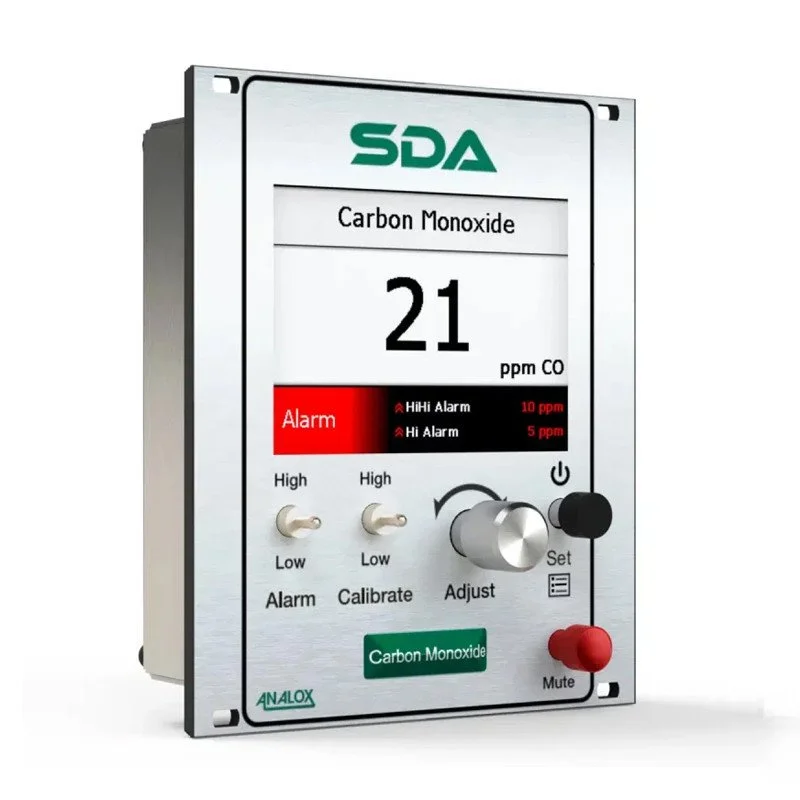
The SDA CO+ carbon monoxide (CO) monitor provides a full colour display of the carbon monoxide (CO) reading taken from an advanced electrochemical cell, as well as offering pinpoint accuracy.
The SDA CO+ carbon monoxide monitor (CO) can be located in sat/dive control or at the compressor.
The CO+ adheres to strict CO standards including NORSOK 4-100, EH74/2 and BS8478 and has data logging capabilities.
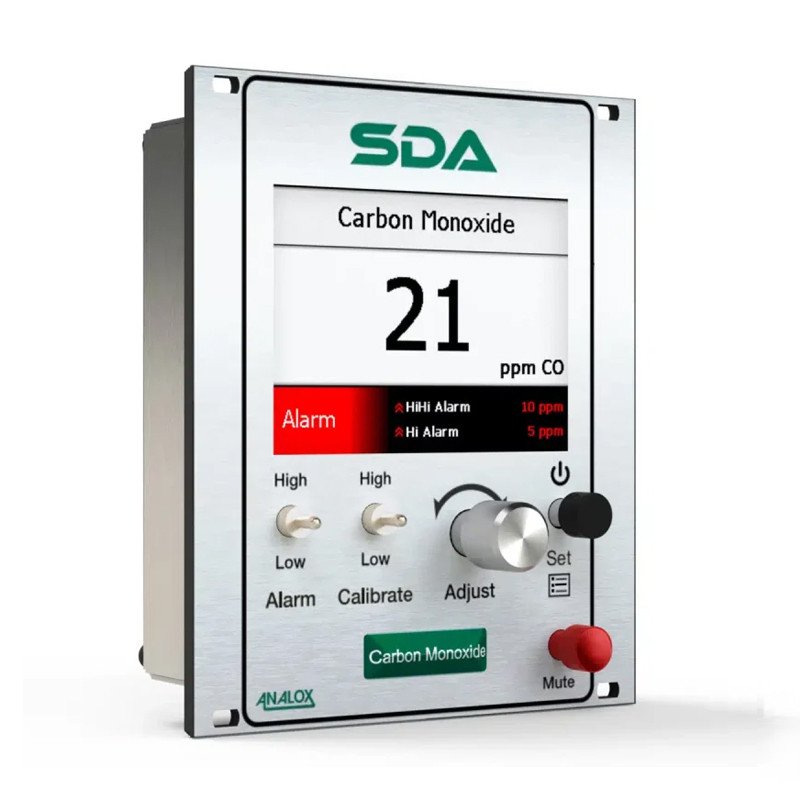
The SDA CO monitor provides a full colour display of a carbon monoxide (CO) reading and is fast and accurate – designed for commercial diving in mind.
The gas monitor reads results from a state-of-the-art, long-life digital electrochemical sensor. These results are shown on a full color display.
The alarm set points and calibration can be achieved using the front panel user interface. The SDA CO provides audio/visual alarms, optional data-logging and 4-20mA/relay outputs.
The SDA CO replaces the obsolete Analox 3000 and is fully retrofittable as a direct replacement.
Diving system classification societies and industry bodies such as IMCA require/suggest that carbon monoxide levels are maintained at very low levels in a dive system as carbon monoxide is highly toxic.
Carbon monoxide (CO) can enter the diving system through an air compressor or a gas transfer compressor. It could also be present in the delivered gas and is metabolized by the divers so is produced in the chamber during operations.
The SDA CO can be located in sat/dive control or at the compressor. Both the SDA CO and the optional flow panel can be provided as either rack or panel mount.
The accuracies supplied by the SDA Depth are compliant with DNV, IMCA, Lloyds, ABS, and ADCi requirements/guidelines.
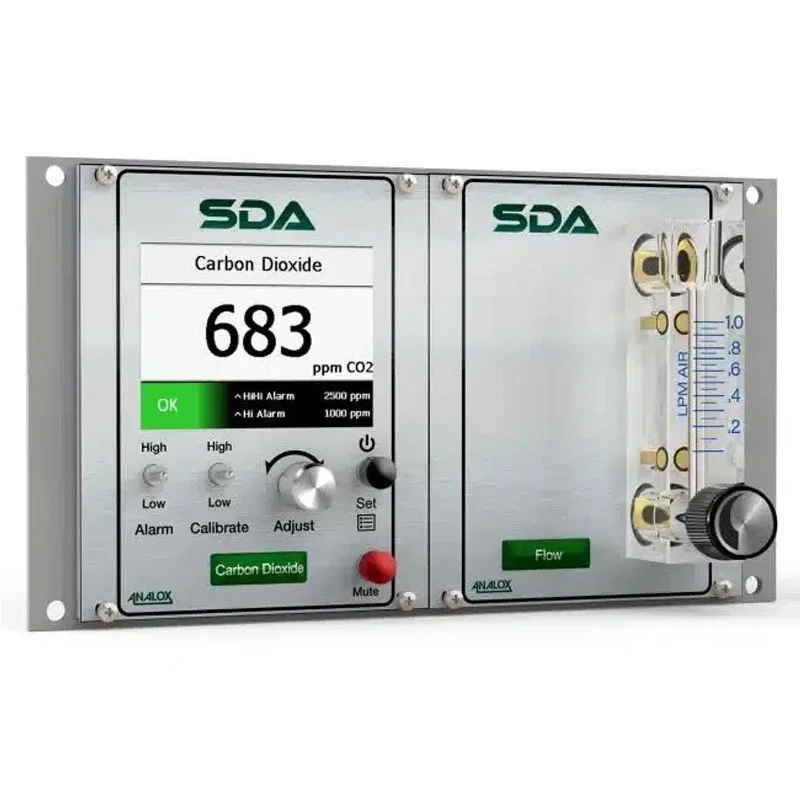
The SDA carbon dioxide (CO₂) monitor provides a full-colour display and can be used alongside a digital sensor like the 5S Mk3 to maintain a comfortable and safe saturation diving chamber.
The alarm set points and calibration can be achieved using the front panel user interface. The SDA carbon dioxide (CO₂) provides audio/visual alarms, optional data-logging and 4-20mA/relay outputs. The SDA carbon dioxide (CO₂) monitor interfaces with our state of the art digital 5S Mk3 sensor.
The SDA carbon dioxide (CO₂) monitor replaces the now obsolete Analox 5001 and is fully retrofittable as a direct replacement.
Maintaining a comfortable and safe chamber environment is vital to achieving a successful diving operation. The accuracies supplied by the SDA carbon dioxide monitor are compliant with DNV, IMCA, Lloyds, ABS, and ADCi requirements/guidelines.
The SDA carbon dioxide (CO₂) monitor is normally located in sat/dive control and can be supplied in rack or panel mount configurations.
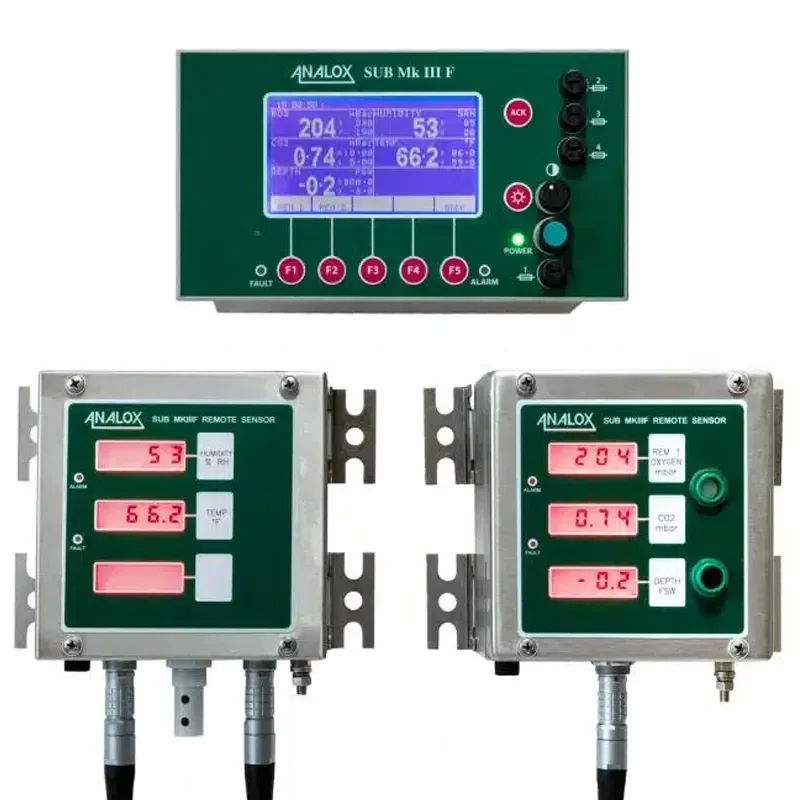
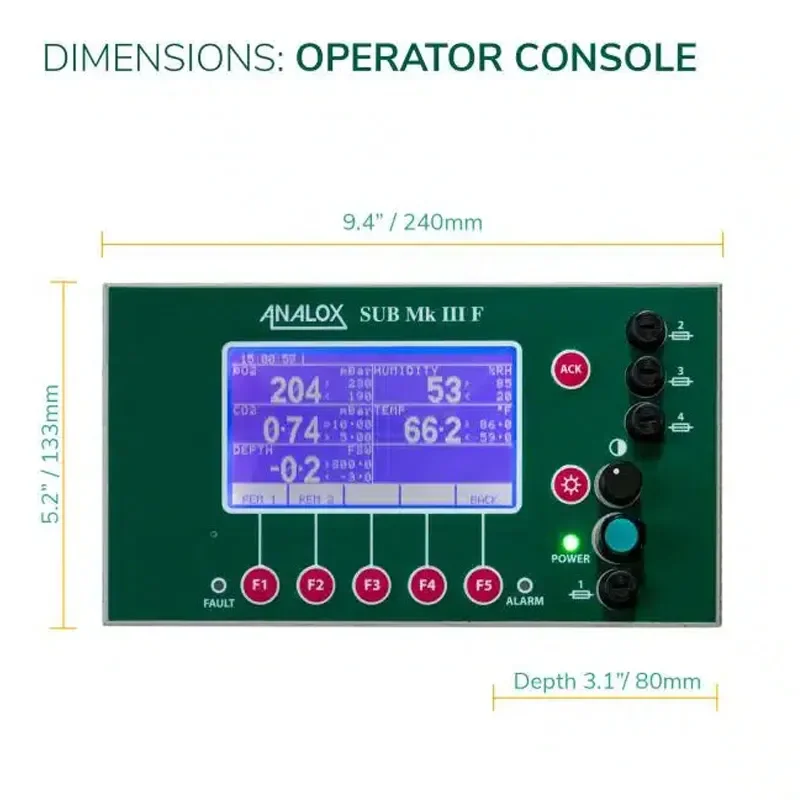
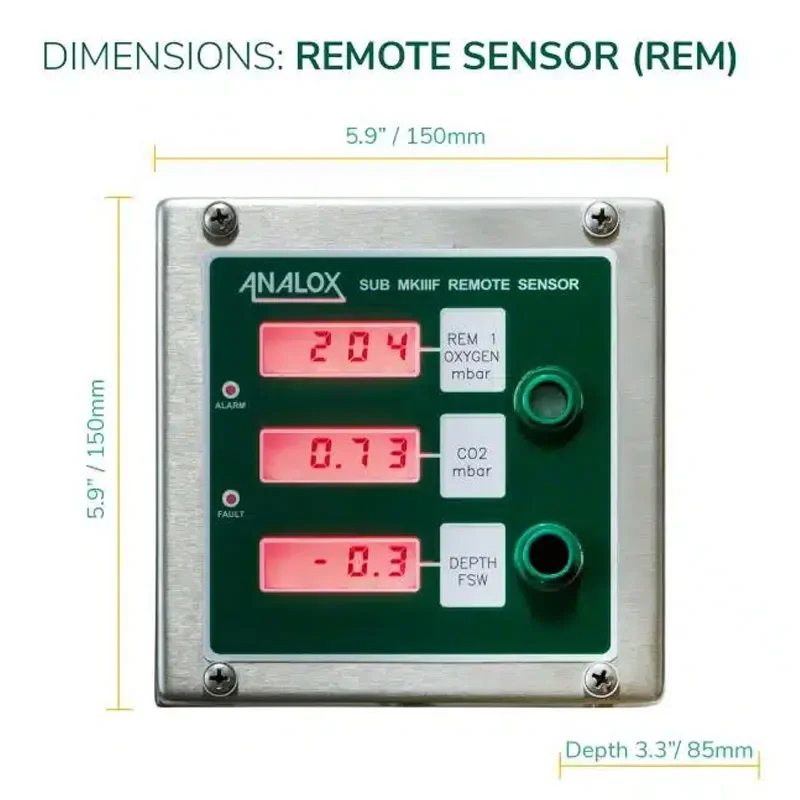
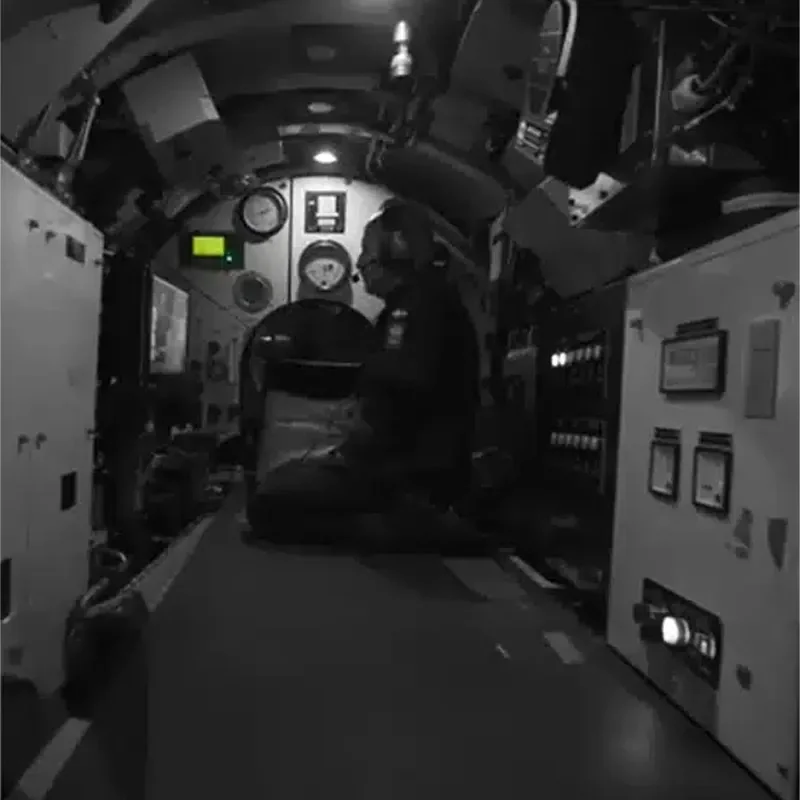
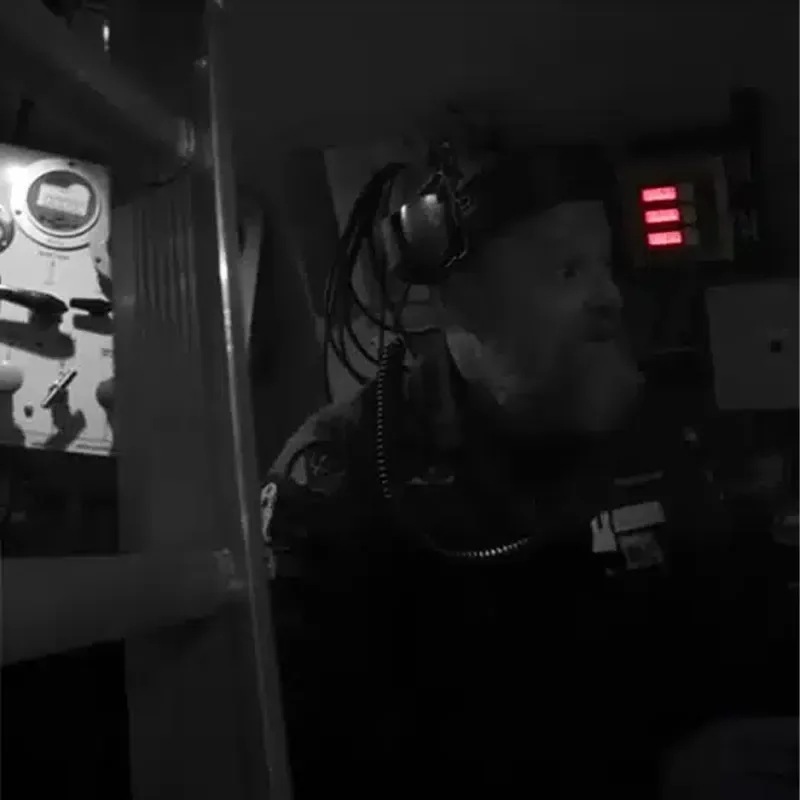
Operating in a Hyperbaric or Hypobaric environment can be stressful enough, but how do you make sure that the environment is safe to breathe?
The Sub MkIIIF has been designed to be a flexible gas monitor. Configured to meet your specific requirements, the REM units allow for variable installation and location of sensors too.
Illuminated display providing an easy to read screen
Can connect to 3 REM units allowing for a greater degree of flexibility
Audio and visual alarms ensuring you are notified of a potential issue
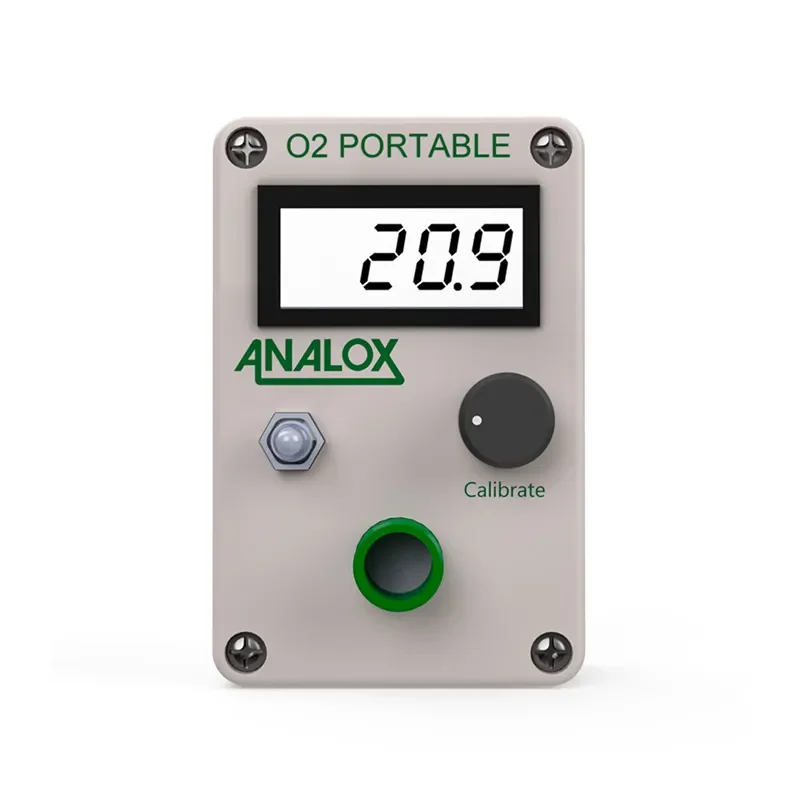
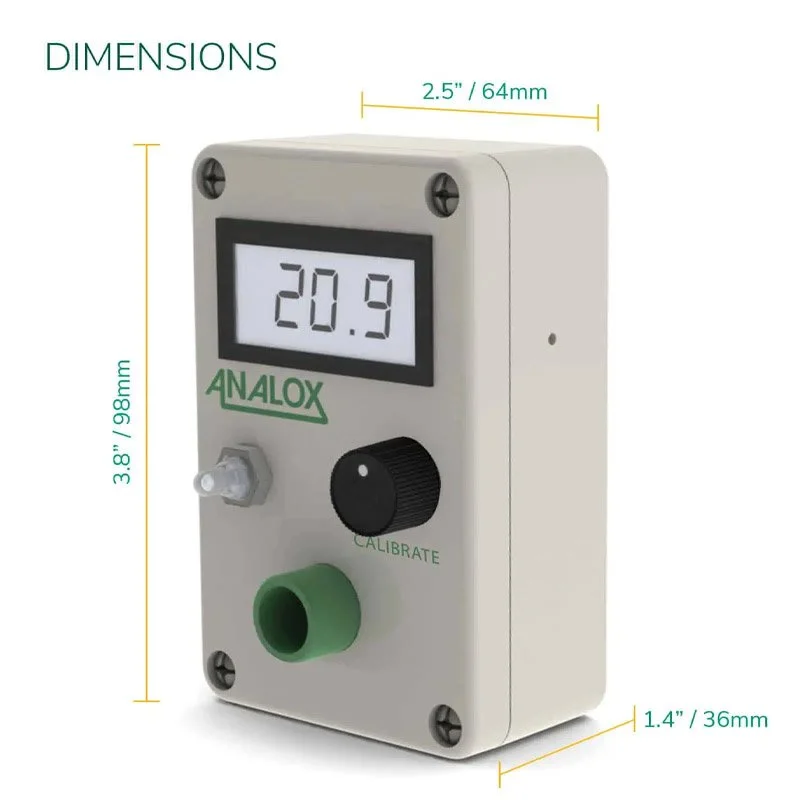
Knowing what the oxygen (O₂) content is in your breathing cylinder is vital across various industries including diving and medical. To do this efficiently and cost-effectively, you need the Analox O₂ Portable.
The O₂ Portable is an oxygen monitor designed to provide sample readings from cylinders containing different levels of O₂. The O₂ Portable is supplied with a sampling adaptor to be easily fitted to cylinders.
Fitted with a temperature compensated sensor which offers an expected 3 year life
Water and drop resistance, perfect for when using onboard diving trips
Compact and robust with minimal maintenance costs
Fast and easily transportable
Applications where the O₂ Portable should be used include those working with enriched oxygen in:
Medical environments
Laboratories
Clinics and Hospitals
Dive filling stations and scuba schools where gas cylinders are checked on deck before a dive
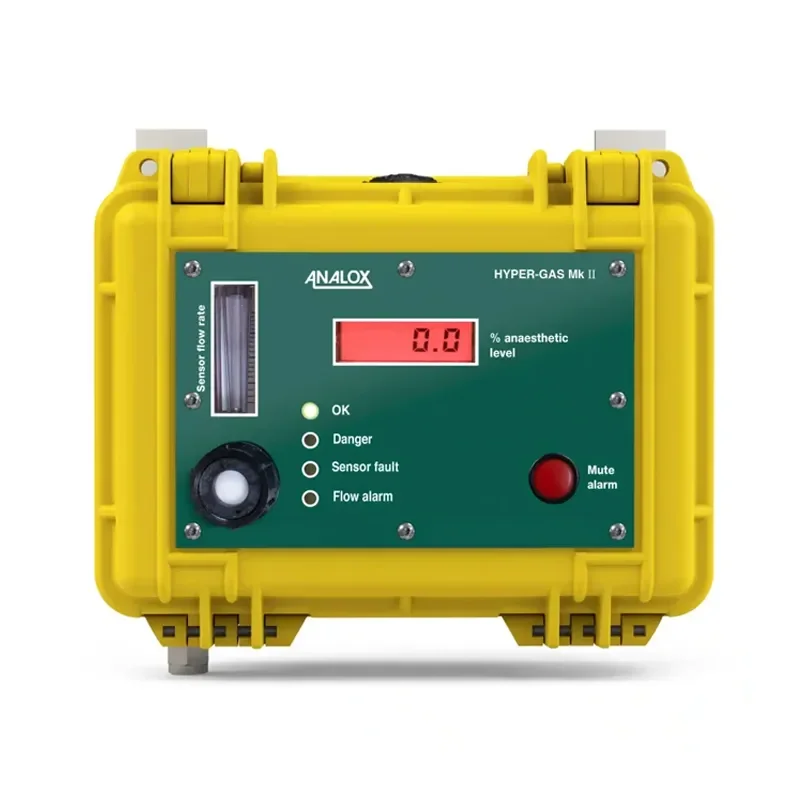
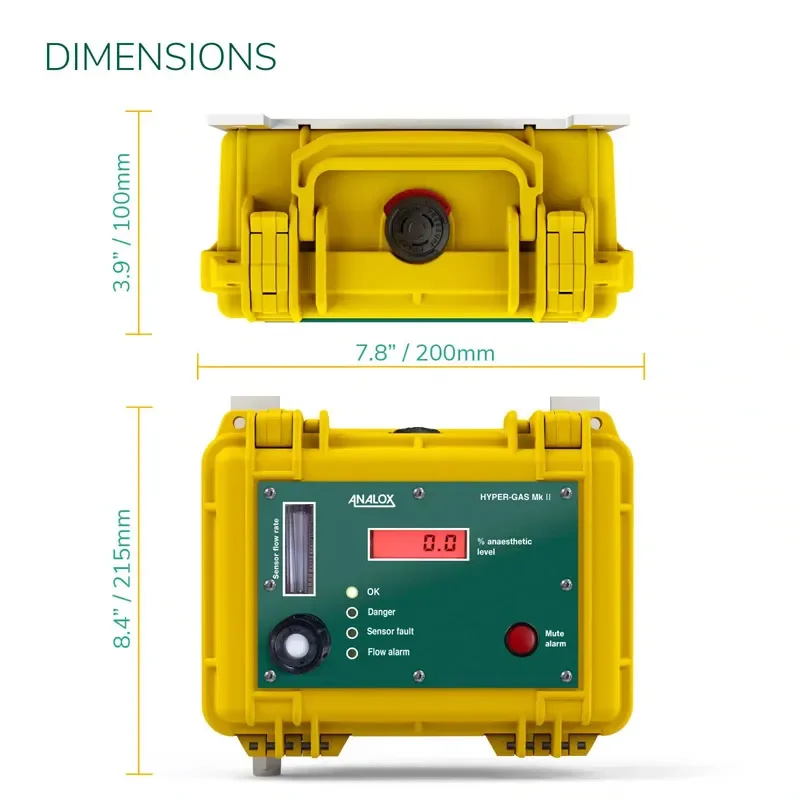
The only hydrocarbon monitor in the world which can accurately monitor the hydrocarbon levels present in a deep sea diving bell.
The Hyper-Gas MkII is a unique, hyperbaric hydrocarbon monitor comprising of a bell monitor which contains a sensor manifold and a topside repeater which mimics the status of the bell monitor. The system is set to alarm at 10% of the amount of hydrocarbons required to cause anaesthesia and has both audible and visual alarms. The sound can also be muted so that it does not interfere with comms during an emergency situation.
Analox recommends that the operator keeps a minimum of one spare manifold on the vessel for every operational bell monitor.
Compact Bell monitor (which houses the manifold)
Topside repeater
Datalogging
Calibration and sensor replacement reminders
Audible and visual alarms
Mute function
Internal filtration and dryer
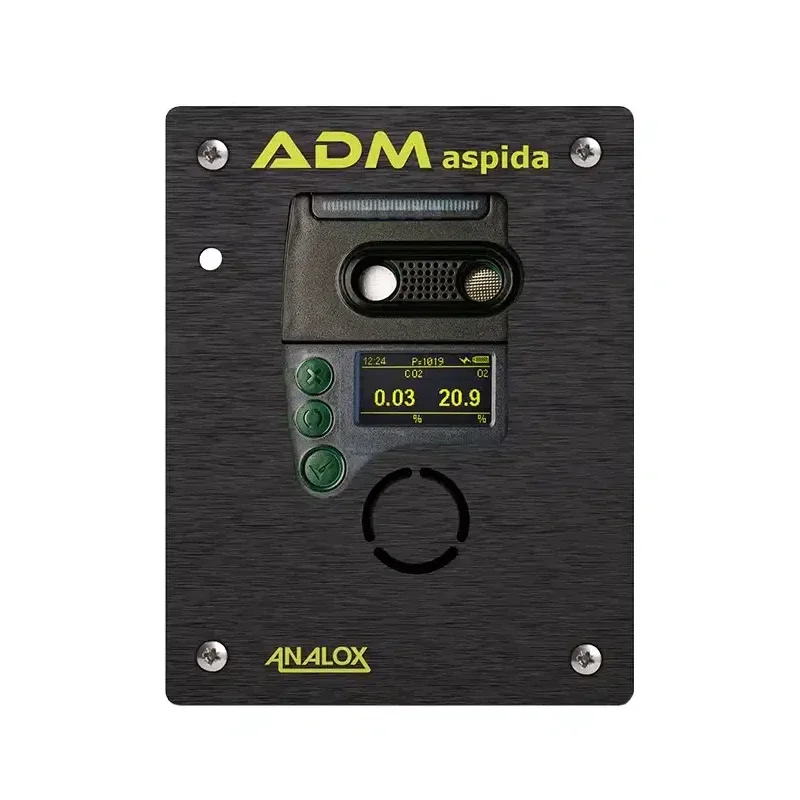
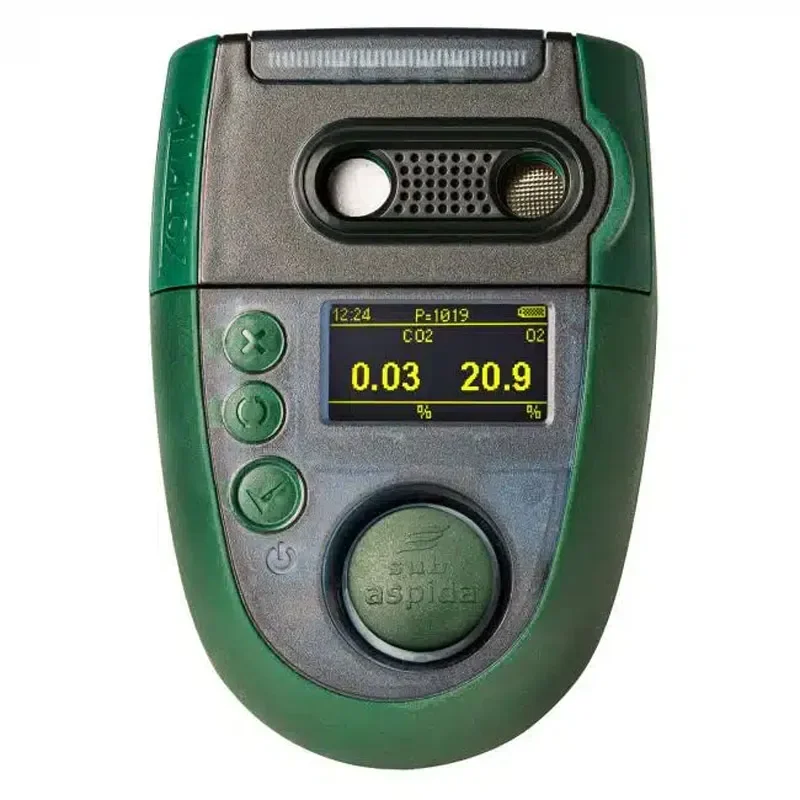
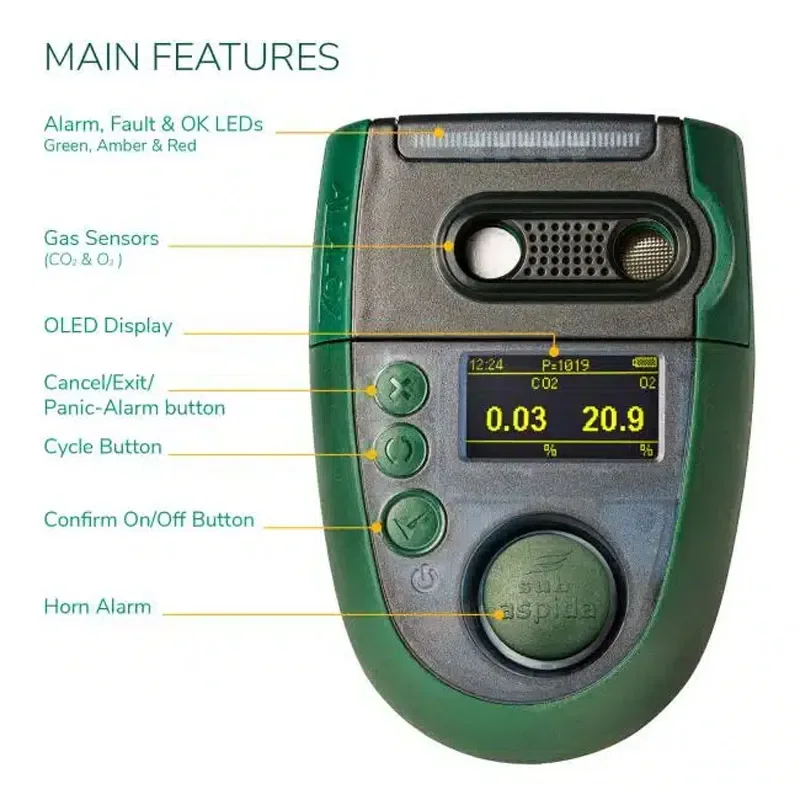
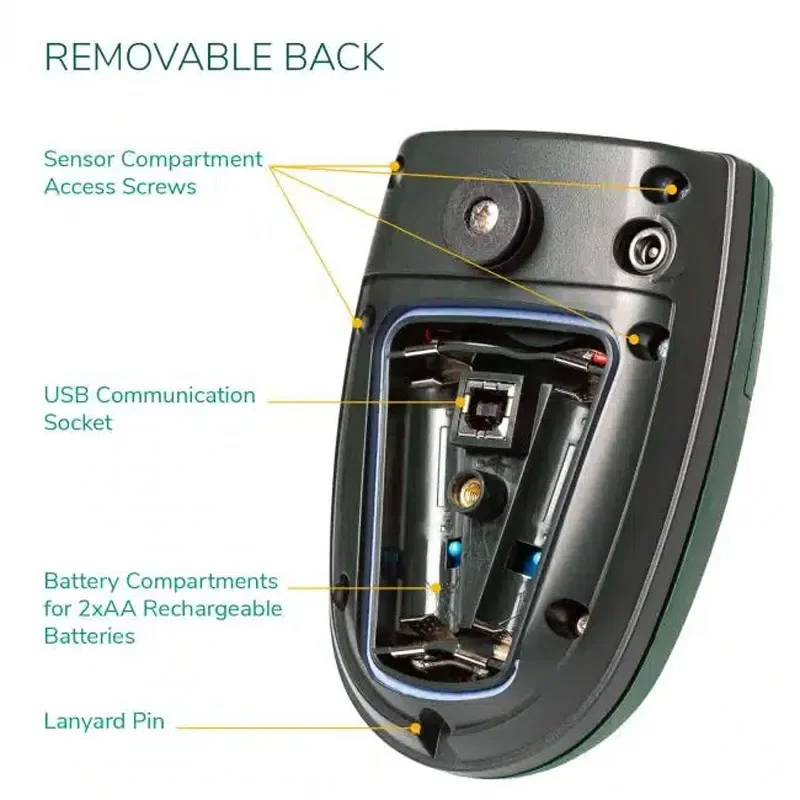
In 2000, IMCA released a reference document D 023 ‘Design for Surface Orientated (Air) Diving Systems’. Within the document, there was a recommendation for an oxygen (O₂) monitor. In response to the requirement, Analox designed the ADM Aspida.
Part of the Aspida family and manufactured in a small and rugged portable case, the ADM Aspida it is a cost-effective oxygen (O₂) and carbon dioxide (CO₂) monitor. It is operator maintained to ensure there is minimal downtime and enable reduced running & maintenance costs.
The ADM Aspida is available with sensors to monitor O₂ only, CO₂ only or dual gas. With a high IP rating, easy calibration functions and data logging, the ADM Aspida, a hyperbaric chamber monitor, offers an amazingly affordable price point for a great specification in the commercial diving industry.
IP65 rated, ensuring the unit is dust tight and protected against water
The unit can be used to analyse the air quality from a portable decompression chamber
ADM Aspida can be a dual monitor by adding a carbon dioxide (CO₂) sensor to the monitor
The ADM Aspida is supplied with datalogging function as standard, assisting you in keeping records
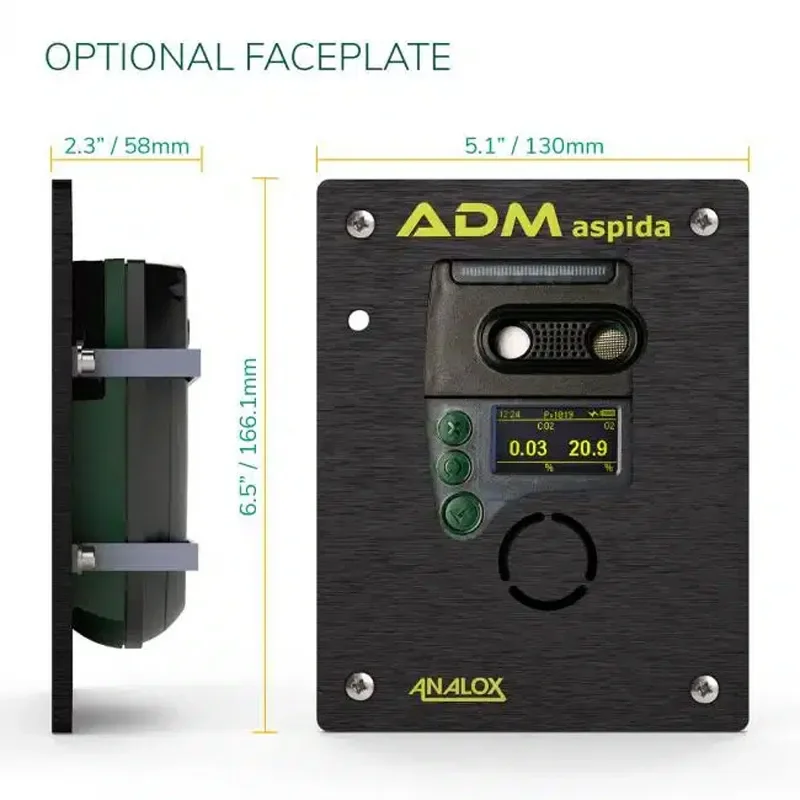
Optional faceplate to make it panel mounted
Applications
Diving
Medical
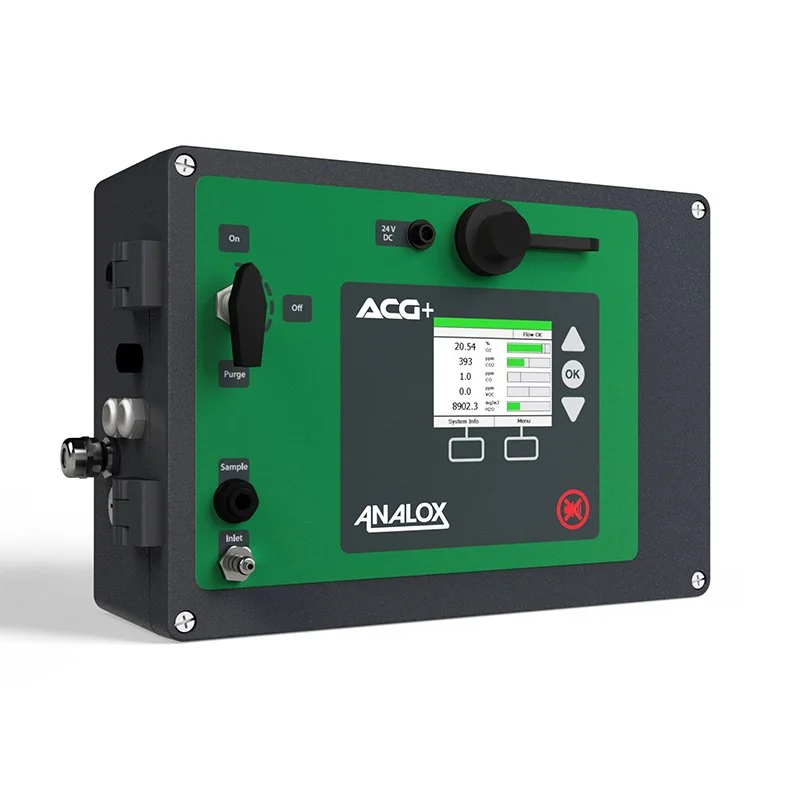
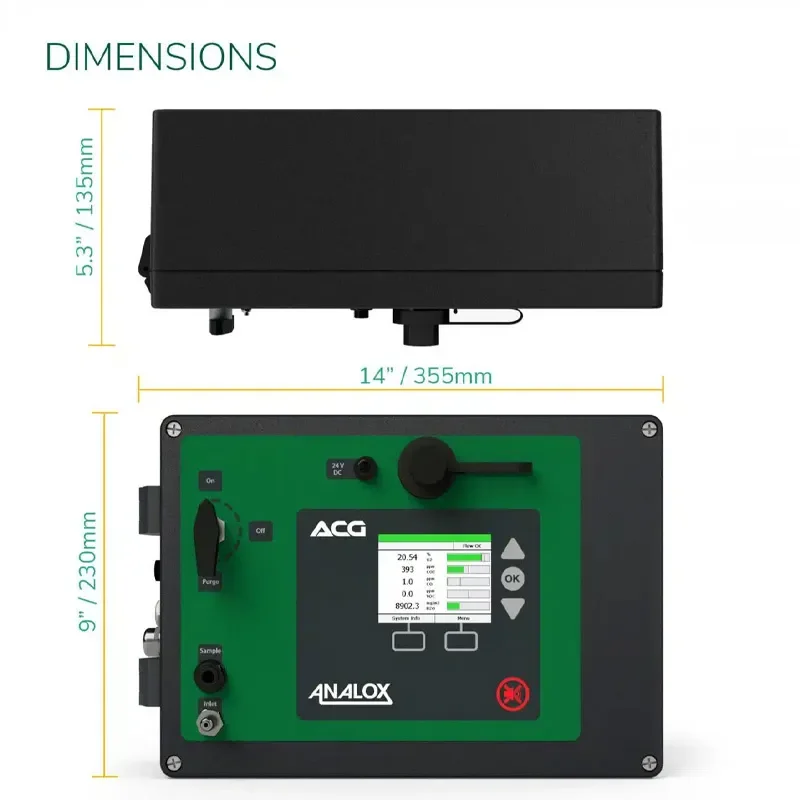
Say goodbye to fiddly tube tests and expensive lab analysis and say hello to a reliable, accurate monitor which can help you meet EN12021, DEF-STAN 68-284, CGA, CSA and OSHA compliance.
In the highly precise world of compressed breathing air, true professionals demand proven results, consistent reliability along with turnkey installation and maintenance. The Analox team recognises this and has built the ACG+ to answer these challenges.
Provides continuous monitoring 24/7
Low maintenance and is easy to install and maintain
Provides 90 days of datalogging which you can easily retrieve via a USB connection
Cost effective alternative to colorimetric tube testing
Supplied as either a fixed or portable version depending upon your needs
Can be used on any breathing air compressor
Digital display
Diving
Emergency Services
Manufacturing
Paint Spraying
Ships
Medical
No results match your search. Try removing a few filters.